Why Most Food Businesses Fail in the First Year in India
Why Most Food Businesses Fail in the First Year in India
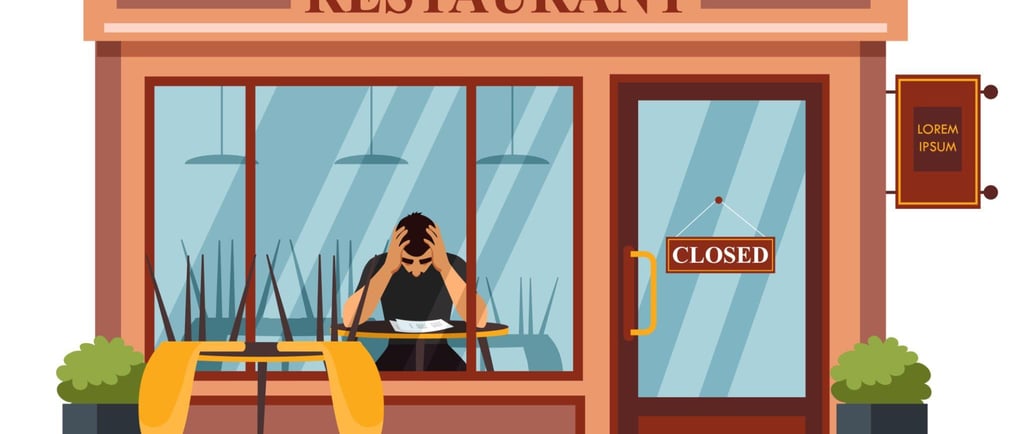
Every year, thousands of people in India start food businesses with excitement, passion, and big expectations. Some dream of opening restaurants, others begin cloud kitchens or small takeaway outlets. But within the first year, many of these businesses quietly shut down.
The reason is rarely a lack of passion.
Most food businesses fail because they begin without strong systems, operational clarity, or realistic expectations. In today’s competitive market, good food alone is not enough. Sustainable businesses are built through consistency, discipline, and simplified operations.
This is especially important for first-time entrepreneurs entering the food industry with limited experience.
The Hidden Reality of the Food Industry
The food industry looks exciting from the outside, but daily operations are far more demanding than most people expect.
A food business requires:
Consistent taste every day
Fast preparation during peak hours
Cost control
Staff management
Customer retention
Operational discipline
Many new entrepreneurs focus heavily on branding and interiors while underestimating the pressure of running daily kitchen operations.
This creates stress early in the journey.
👉 Related Blogs:
How to Start a Low-Investment Food Franchise or Cloud Kitchen in India
Home Kitchen vs Cloud Kitchen vs Small Outlet: Which Food Business Model Is Right for You?
Common Reasons Food Businesses Fail
There are patterns behind most food business failures in India.
1. Over-Investment
Many entrepreneurs spend heavily on:
Interiors
Large spaces
Equipment before validating demand.
2. Complex Menus
Large menus increase
Wastage
Preparation time
Staff confusion
Inconsistency
3. Lack of Operational Systems
Without systems, kitchens become dependent on:
One chef
One staff member
Daily improvisation
This makes scaling difficult.
4. Unrealistic Expectations
Many people expect profits immediately. But food businesses require patience, process refinement, and time.
👉 Related Blog:
Common Mistakes First-Time Restaurant Owners Make in India
Why Systems Matter More Than Passion
Passion may start a food business, but systems keep it alive.
Successful food businesses focus on:
Standardised recipes
Simplified workflows
Controlled costs
Repeatable processes
This is why franchises and scalable cloud kitchens invest heavily in operational structure rather than only marketing.
A system-driven kitchen performs better under pressure and reduces dependency on highly skilled staff.
The Importance of Recipe Consistency
One of the biggest hidden challenges in the food industry is maintaining consistency.
Customers return when:
Taste remains the same
Portions are reliable
Delivery quality stays stable
But consistency becomes difficult when recipes are:
Over-complicated
Poorly documented
Dependent on individual cooking styles
At Souski Foods, recipe simplification became one of the most important parts of building sustainable operations. Recipes were repeatedly tested, refined, and simplified to ensure they worked not only in ideal situations—but also during real kitchen pressure.
This operational learning later became the foundation for:
franchise systems
recipe books
consultation guidance
simplified kitchen workflows
👉 Related Blog:
Why Recipe Consistency Is the Backbone of Scalable Food Businesses
Why Simplified Operations Reduce Risk
Many first-time entrepreneurs fail because their operations are too difficult to manage daily.
Simplified systems help businesses:
Train staff faster
Reduce kitchen confusion
Improve preparation speed
Maintain food quality
Control costs more effectively
This is especially important for:
home kitchens
cloud kitchens
compact takeaway outlets
Businesses that simplify operations early are usually more sustainable in the long run.
Practical Recipe Books for Food Entrepreneur
Creating recipes that work consistently in real business environments takes time, testing, and operational understanding. Many entrepreneurs spend months experimenting before finding systems that are practical for daily use.
To simplify this process, Souski Foods provides structured recipe books designed for:
home kitchens
cloud kitchens
takeaway outlets
beginner-friendly operations
These recipe books focus on:
simplified preparation methods
repeatable taste consistency
operational practicality
faster workflow management
Recipe Book Pricing
Simplified 3-Step model 500+ Professional grade Recipes Book: Starting from ₹9,999/-
These systems are especially useful for entrepreneurs looking to reduce experimentation time and build structured kitchen operations faster.
Food Business Consultation Service
Many new entrepreneurs struggle not because of lack of effort, but because they lack operational clarity.
Souski Foods also provides practical consultation support for:
food business setup guidance
menu simplification
cloud kitchen planning
operational structuring
beginner-focused food business guidance
The consultation process focuses on real operational challenges rather than generic advice.
Consultation Pricing
Detailed Business Consultation: Starting from ₹1,999
Operational & System Guidance: Customised based on requirements
These consultations are designed for entrepreneurs who want practical direction before making large investments or operational decisions.
Learning Through Experience Matters
Many food entrepreneurs try to learn everything through trial and error. Unfortunately, mistakes in the food business can become expensive very quickly.
Years of kitchen experimentation, recipe refinement, operational mistakes, and practical learning often become more valuable than theory alone.
This is one reason why structured guidance has become increasingly important for new entrepreneurs entering the food industry.
👉 Related Blog:
Practical Guidance for New Entrepreneurs Entering the Food Industry
Final Thoughts
The food industry is challenging, but it is not impossible.
Businesses fail not because opportunity is missing, but because systems are often ignored. Entrepreneurs who focus on simplified operations, practical learning, and consistency build stronger foundations for long-term growth.
In the end, sustainable food businesses are rarely built through shortcuts.
They are built through patience, refinement, and disciplined execution.
Continue Learning
How to Start a Low-Investment Food Franchise or Cloud Kitchen in India
How to Build a Sustainable Restaurant or Cloud Kitchen Business
Explore Franchise, Recipe Book & Consultation Services
Practical systems, operational guidance, and real kitchen experience designed to simplify food businesses.
👉 View Franchise Models & Investment Details
👉 Explore Recipe Books
👉 Book a Consultation
Address
Mallampet,Bachupally
Hyderabad
Where hard work turns into opportunity
Souski Foods offers low-investment, scalable franchise models built on simplified recipes, tested systems, and strong support—helping first-time entrepreneurs start confidently and grow sustainably in India’s food market.